Discover how U.S.-based SMBs reduce costs, improve compliance, and scale faster with offshore bookkeeping services designed for American businesses.
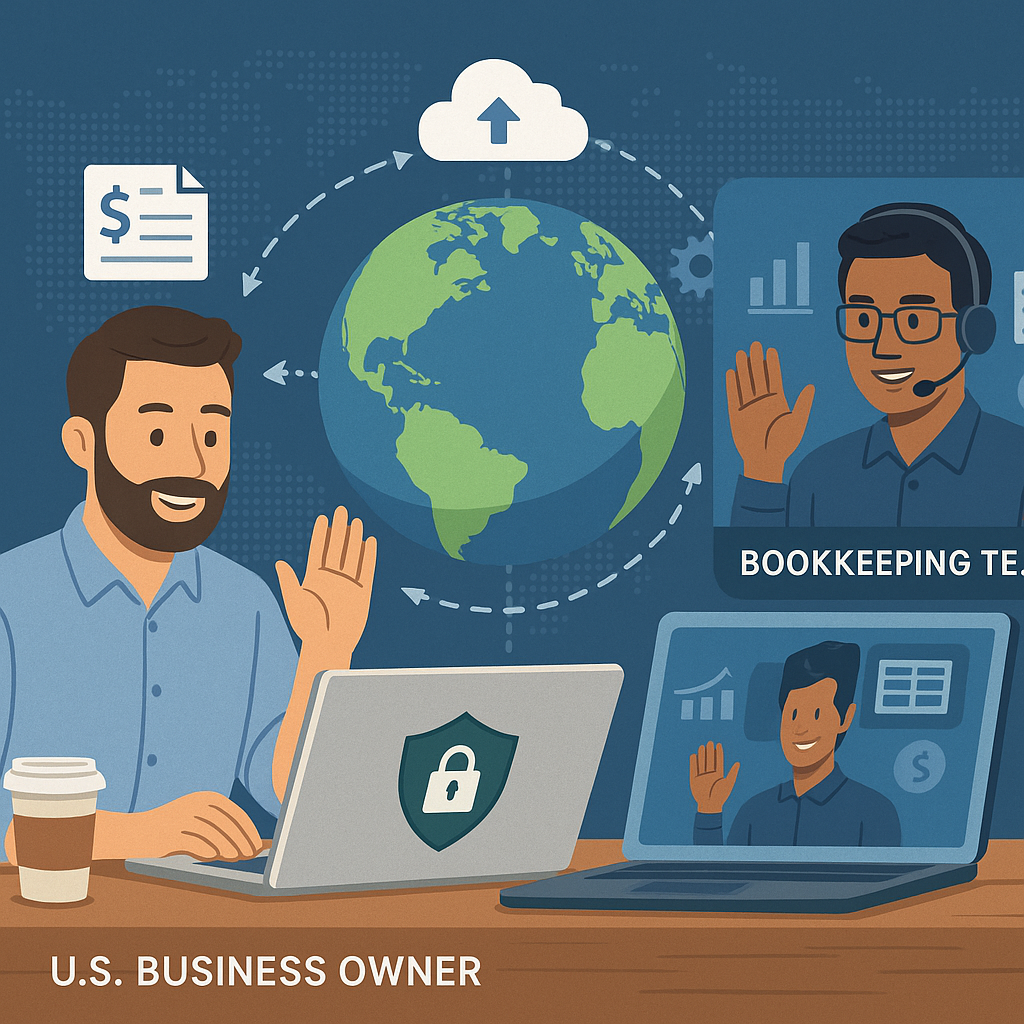
Discover how U.S.-based SMBs reduce costs, improve compliance, and scale faster with offshore bookkeeping services designed for American businesses.
What Is Offshore Bookkeeping for U.S.-Based SMBs?
Offshore bookkeeping refers to the process of delegating your financial record-keeping and accounting functions to qualified professionals located outside of the United States. Rather than hiring and managing in-house bookkeepers, U.S.-based small and mid-sized businesses (SMBs) partner with specialized offshore service providers who handle daily transactions, reconciliations, reporting, and compliance from international delivery centers.
This model leverages global talent pools, advanced technology platforms, and standardized processes to deliver efficient and reliable bookkeeping services tailored to the unique regulatory and operational requirements of American businesses. Offshore bookkeeping is not simply about moving tasks overseas it is about accessing a higher level of expertise and efficiency that supports strategic business objectives.
Why U.S. Small Businesses Are Outsourcing Bookkeeping Offshore
The trend toward offshore bookkeeping among U.S. SMBs has accelerated in recent years as business owners seek ways to optimize costs, overcome talent shortages, and build scalable finance operations. The high cost of local hiring, lengthy recruitment processes, and ongoing training requirements make in-house bookkeeping increasingly burdensome for growing companies.
Outsourcing bookkeeping functions offshore allows SMBs to tap into experienced professionals with extensive knowledge of U.S. accounting practices often at a fraction of the cost. By partnering with a trusted provider, businesses can ensure continuity, reduce operational risk, and redirect internal resources toward core growth initiatives.
Key Benefits of Offshore Bookkeeping Services
Cost reduction is a primary motivator for offshore bookkeeping, but the benefits extend far beyond savings. Offshore service providers like FinRecon offer access to a large pool of skilled accountants and bookkeepers who are trained in U.S. GAAP, IRS regulations, and multi-jurisdictional compliance.
Key advantages include:
– Scalability: Offshore teams can quickly expand or contract based on business needs, supporting seasonal spikes or rapid growth without the delays of local hiring.
– Access to Skilled Professionals: Offshore firms maintain rigorous recruitment, training, and quality assurance processes, ensuring consistent service delivery by credentialed experts.
– Faster Turnaround: Leveraging time zone differences, offshore teams deliver overnight processing, enabling faster month-end closes and real-time financial visibility.
– Improved Financial Visibility: Standardized processes and robust reporting tools provide business owners with timely, accurate financial insights to support decision-making.
Compliance, Data Security, and U.S. Accounting Standards
Compliance with U.S. accounting standards and robust data security are non-negotiable for SMBs. Leading offshore bookkeeping providers, including FinRecon, enforce strict adherence to U.S. GAAP, IRS requirements, and state-specific tax regulations. Processes are regularly reviewed and updated in line with regulatory changes.
Data security is ensured through enterprise-grade technologies, SOC 2 and ISO 27001 certifications, role-based access controls, and secure cloud platforms. Audit-ready documentation and process transparency enable businesses to meet both internal and external compliance obligations confidently.
Common Concerns About Offshore Bookkeeping (and How to Address Them)
Despite its advantages, some business owners have reservations about offshore bookkeeping primarily regarding data security, communication, perceived loss of control, and compliance risk. These concerns are valid, but can be effectively addressed with the right partner.
FinRecon mitigates these risks with bank-grade security protocols, white-label integration that embeds offshore staff within client workflows, transparent communication channels, and documented processes. Regular reporting, benchmarks, and service-level agreements ensure ongoing accountability and alignment with client objectives.
How Offshore Bookkeeping Supports Business Growth and Scalability
As SMBs scale, finance and accounting requirements become more complex and demanding. Offshore bookkeeping provides an agile solution that grows with your business. Flexible team sizing, 24/7 operational coverage, and surge support during peak periods ensure that finance operations never become a bottleneck.
By freeing up leadership capacity and reducing the administrative burden, offshore bookkeeping empowers business owners and CFOs to focus on high-value strategic initiatives that drive long-term growth.
For example, a U.S.-based professional services firm scaled from $3M to $10M in revenue while reducing bookkeeping costs by over 40% after transitioning to an offshore model.
Why FinRecon Is a Trusted Offshore Bookkeeping Partner for U.S. SMBs
FinRecon Global Services stands out for its ICAI peer-reviewed expertise, over 30 years of institutional experience, and a deep bench of U.S.-qualified chartered accountants. Our all-inclusive service model covers technology, management oversight, and continuous bench coverage—eliminating hidden costs and ensuring continuity.
We deliver white-label integration, rapid onboarding (2-3 weeks), and tailored solutions to fit the unique needs of U.S. SMBs across diverse sectors. Our commitment to security, compliance, and process excellence is backed by a proven track record in handling complex U.S. accounting and audit requirements.
Is Offshore Bookkeeping Right for Your Business?
Offshore bookkeeping is ideally suited for SMBs seeking to reduce costs, improve accuracy, and gain operational agility. It is especially beneficial for companies experiencing rapid growth, seasonal fluctuations, or challenges in attracting and retaining local finance talent.
Business owners should assess their current pain points, evaluate their compliance requirements, and consider the scalability needs of their finance function. A reputable offshore partner like FinRecon can provide a tailored assessment to determine fit and potential ROI.
Getting Started With Offshore Bookkeeping Services
Transitioning to offshore bookkeeping begins with a structured onboarding process starting with a needs assessment, process mapping, and clear service-level agreements. FinRecon’s four-phase onboarding framework ensures seamless integration, knowledge transfer, and minimal business disruption.
U.S. SMBs ready to reduce costs, improve compliance, and scale with confidence can start with FinRecon’s free consultation and ROI assessment to evaluate the impact of offshore bookkeeping on their business.